
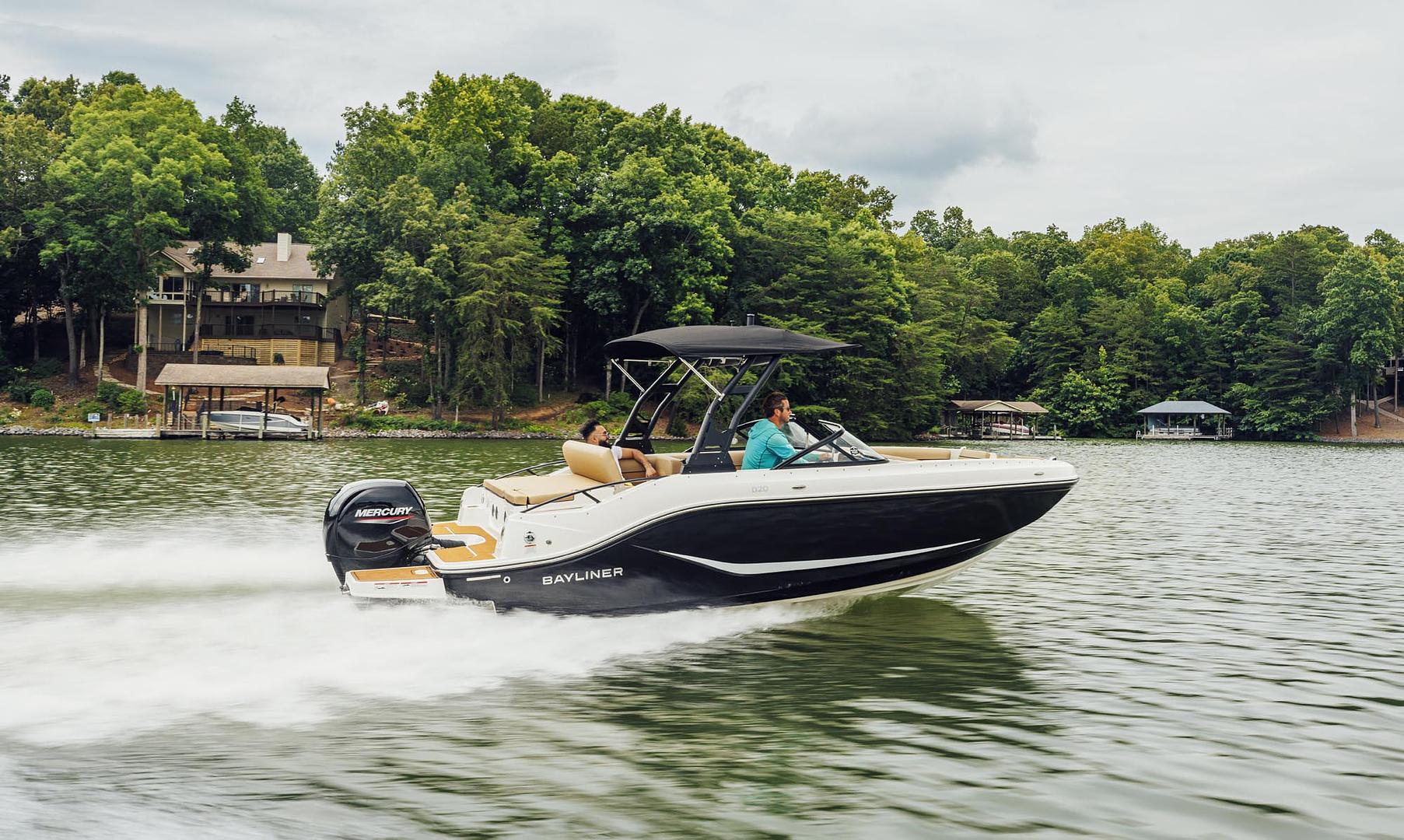
Deckboats vs Bowriders: Which Family-Friendly Boat Fits Your Lifestyle?
Choosing between a deck boat and a bowrider is one of the most common decisions for buyers shopping for a versatile, do-it-all recreational boat. Both are popular for lake days, cruising, swimming, and watersports, but they’re designed with different priorities. If you are comparing deckboats vs bowriders, the right choice comes down to your typical passenger count, how you use onboard space, and where you boat most often.
This guide breaks down the real-world differences in layout, performance, handling, comfort, and value—so you can match the boat to your weekends, not the other way around.
What Is a Deck Boat?
A deck boat is built around one main advantage: maximum usable space. Deck boats typically have a wider beam carried farther forward, creating a more open, platform-like deck area. Many models feature a broad bow with wraparound seating and generous storage, making them a favorite for families and groups who prioritize lounging, swimming, and entertaining.
In short, a deck boat often feels like a “floating patio,” while still being capable of pulling a tube or cruising comfortably.
What Is a Bowrider?
A bowrider is a classic runabout-style boat with an open bow seating area. Bowriders tend to have a more tapered, performance-oriented hull shape than deck boats. They are widely known for responsive handling, sporty looks, and a balance between cruising comfort and watersports capability.
For many buyers, bowriders are the default choice for an all-around recreational boat, especially if you value driving feel and versatility.
Deckboat vs Bowrider: Key Differences That Matter
1) Layout and Space
If you regularly boat with a larger group, this is where deck boats stand out. Their wider bow design often allows for more seating and easier movement around the boat. Deck boats commonly provide large entry/exit areas for swimming and more “walkable” space for kids and guests.
Bowriders still provide excellent seating—especially in the 19–24 foot range—but their forward sections are usually narrower. That can mean slightly less elbow room in the bow compared to a similarly sized deck boat.
Choose a deck boat if your top priority is spacious seating and entertaining. Choose a bowrider if you want a balanced layout with a sportier profile.
2) Passenger Capacity
Because deck boats maximize beam and interior volume, they often have higher rated capacities. If your typical day includes extended family, friends, and extra gear, a deck boat can reduce the “crowded cockpit” feeling.
Bowriders can still comfortably host a group, but they tend to feel best with a moderate passenger load—especially when towing watersports or cruising at higher speeds.
3) Performance and Handling
Bowriders generally deliver a more traditional runabout ride, with quicker turning response and a hull shape that can feel more precise at speed. Many bowriders are designed with watersports and sporty driving in mind, making them a strong choice for owners who enjoy the helm as much as the destination.
Deck boats vary widely by hull design, but many emphasize stability and space. That often translates to a steady platform at rest and comfortable cruising, though some models may not carve turns as sharply as a performance-oriented bowrider.
4) Watersports Capability
Both categories can tow tubes, wakeboards, and skiers, particularly with the right engine package and a proper tow point or tower. The better choice depends on your priority:
- Bowriders are often preferred for watersports because of their handling, acceleration options, and sporty hull characteristics.
- Deck boats can be excellent for casual watersports and family fun, especially when equipped with sufficient horsepower, but may be more “comfort-first” depending on the model.
If watersports are central to your weekends, pay close attention to engine sizing, prop selection, and whether the boat offers a factory watersports package.
5) Ride Comfort in Chop
Where you boat matters. On small to medium lakes with moderate conditions, both deck boats and bowriders can be comfortable. In larger, windier bodies of water, the hull shape can make a noticeable difference.
Many bowriders have a deeper-V style profile than typical deck boats, which can help soften the ride when the water gets rough. Deck boats, with their emphasis on width and space, may ride differently in chop—stable, but sometimes with more impact depending on hull design and speed.
If you frequently face afternoon wind and boat traffic wake, test rides are essential.
6) Fuel Efficiency and Power Needs
Fuel economy depends on engine choice, boat weight, hull design, and how you drive. That said, deck boats sometimes need more power to achieve the same performance feel because they can be wider and heavier for their length. Bowriders often feel lively with a broader range of engine options.
When comparing models, look beyond top speed. Consider cruise RPM, time to plane with your typical passenger load, and how the boat performs when pulling a rider.
7) Storage, Docking, and Trailering
Deck boats can feel larger than their length suggests because of their width and layout. That can be a major advantage onboard, but it may affect:
- Garage storage (beam width and trailer fit)
- Dock space and maneuvering in tight slips
- Trailering comfort, especially for new owners
Bowriders, while not “small,” often have more conventional proportions that can be easier to store and handle for first-time buyers.
Which Is Better for Your Needs?
Choose a Deck Boat If You Want:
- Maximum seating and open deck space for family and friends
- A boat that excels at relaxing, swimming, and sandbar days
- High passenger capacity and a stable platform at rest
- An easygoing cruising experience with room for coolers, toys, and gear
Choose a Bowrider If You Want:
- Sportier handling and a traditional runabout feel
- A strong all-around platform for wakeboarding, tubing, and skiing
- A boat that may perform confidently across a broader range of water conditions
- A sleek profile with a balanced mix of comfort and performance
Smart Buying Tips: What to Compare Before You Decide
Because “deck boat” and “bowrider” describe general styles, details vary by brand and model. Before committing, compare these practical factors:
- Seating ergonomics: Are the seats deep and supportive? Is there comfortable backrest space in the bow?
- Storage volume: Look under seats, in-floor lockers, and dedicated cooler compartments.
- Boarding and swim access: Evaluate ladders, transom design, and whether the layout works for kids and pets.
- Power package: Match horsepower to your typical passenger load and watersports plans.
- Helm visibility and controls: Make sure the driving position feels natural and sight lines are clear.
- Test ride conditions: Try to demo on a normal day, not only on calm water.
The Bottom Line on Deckboats vs Bowriders
There is no universal winner in the deckboat vs bowrider debate—only the best fit for how you boat. If your priority is space, passenger comfort, and an entertaining-friendly layout, a deck boat is hard to beat. If you want a more performance-leaning runabout with agile handling and strong watersports versatility, a bowrider is often the better match.
The most reliable way to decide is to step onboard both styles with your real-world checklist: your typical crew size, the gear you bring, the waters you run, and the activities you do most. With that clarity, the right choice becomes obvious—and your time on the water becomes easier, safer, and more enjoyable.